
Modern Escape Rooms in 2026: Why the Industry Has Evolved Into Full Immersive Movie Sets

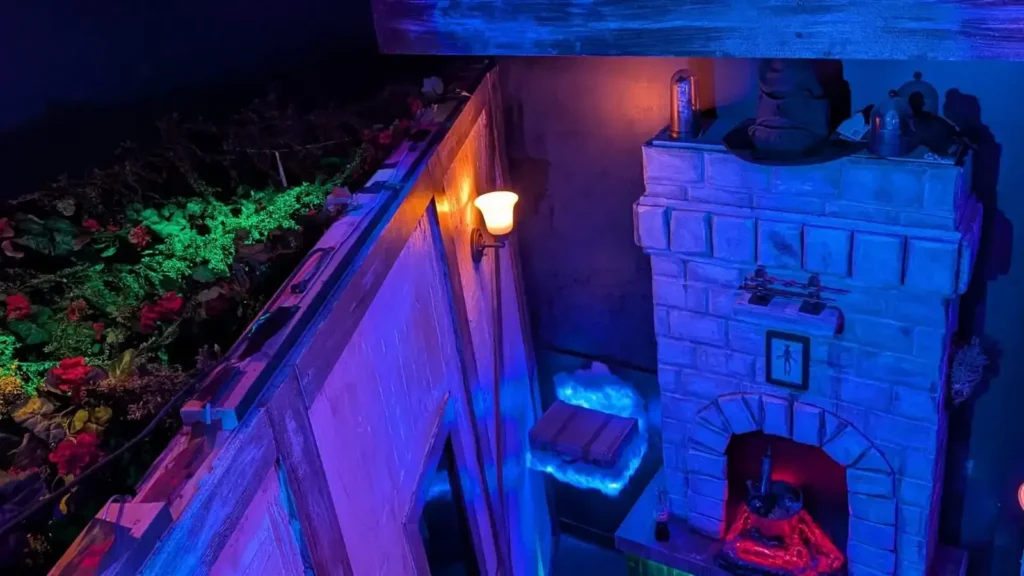
a picture from uptop of the rooms

Over the past decade, escape rooms have grown from simple puzzle games into one of the most immersive forms of live entertainment in the world. What once began as rooms with combination locks and hidden clues has rapidly evolved into something far more ambitious.

In 2026, the most successful modern escape rooms are no longer just puzzle challenges—they are fully immersive environments designed to feel like stepping inside a movie set.

Across the industry, builders are combining theatrical design, engineering, lighting systems, custom sound design, and storytelling to create experiences that blur the line between attraction, theater, and game.

And for players, the result is unforgettable.

The Early Days of Escape Rooms

When escape rooms first appeared in the United States, many venues focused primarily on puzzles. Rooms often consisted of standard spaces filled with padlocks, hidden keys, and paper clues.

While these early games were fun and innovative at the time, the industry has matured dramatically.

Today, players expect something very different.

Instead of solving puzzles in a typical room, they want to enter a completely different world.

The Rise of Immersive Design

The new generation of escape rooms is built around immersion.

From the moment guests enter the venue, the experience begins.

Fluorescent lights are disappearing. Plain walls are being replaced by hand-built environments. Simple puzzle boxes are giving way to interactive props and theatrical moments.

Modern escape room design now includes elements such as:

• cinematic lighting systems
• DMX-controlled environments
• custom architectural set design
• synchronized soundtracks and voiceovers
• atmospheric scents
• hidden electronics and engineering systems

These features combine to create something much closer to a live film set than a traditional puzzle room.
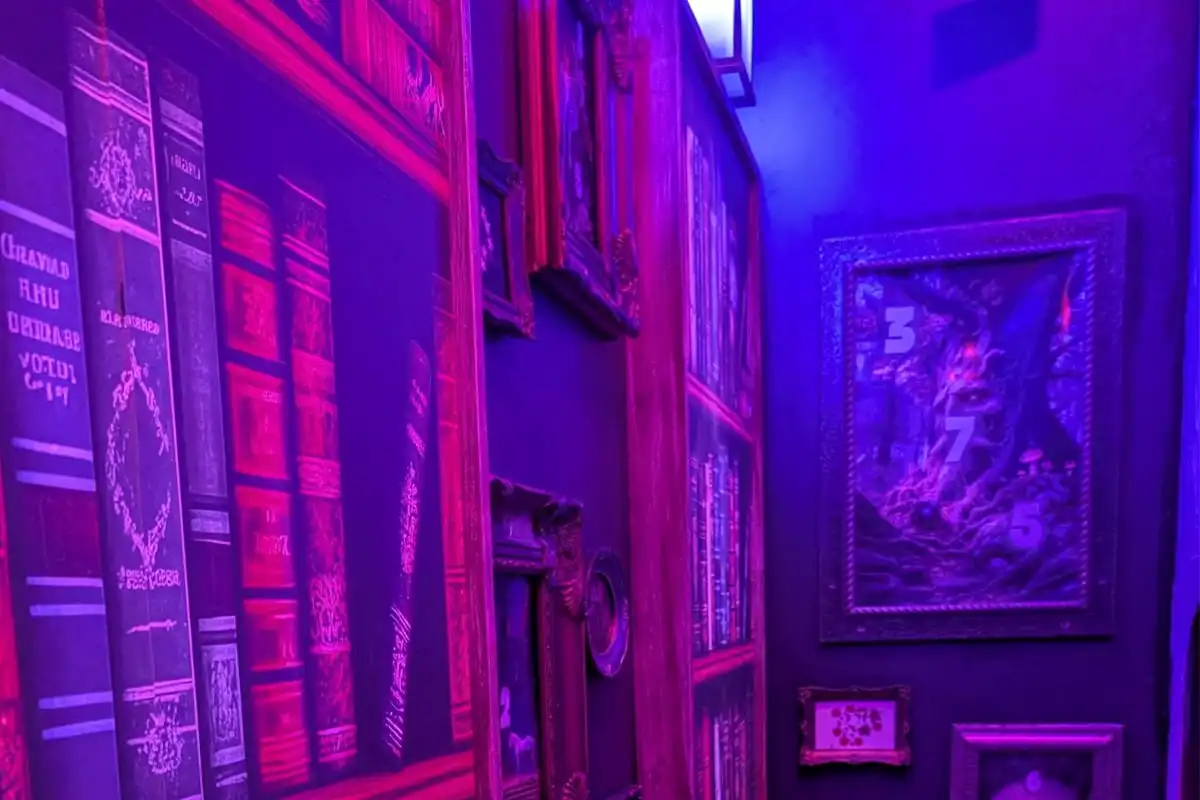
Wizards Study Library - Swords, Stones, & Magic
Wizards Study Library – Swords, Stones, & Magic

Why Storytelling Matters?

Another major shift in escape room design is the role of storytelling.

The best escape rooms now operate around a central narrative.

Players might be rescuing a missing toymaker, uncovering a wizard’s secret chamber, or attempting to alter the timeline aboard a mysterious train.

Instead of simply solving puzzles, guests are completing a mission.

Each clue, prop, and room transition becomes part of a larger story.

This narrative structure dramatically increases engagement and helps players feel like they are part of an unfolding adventure.

Technology Behind the Modern Escape Room

Behind the scenes, many modern escape rooms rely on sophisticated technology to create seamless experiences.

Hidden sensors, electronic triggers, and lighting systems allow rooms to respond dynamically to player actions.

For example, players might trigger:

• secret doors opening automatically
• dramatic lighting effects
• audio cues revealing story elements
• mechanical devices activating in real time

These technologies allow designers to control pacing and surprise moments in ways that were impossible in early escape room builds.

Why the Industry Is Raising the Bar?

As escape rooms continue to grow in popularity, competition between venues has intensified.

Players are now looking for experiences that feel truly unique.

A simple puzzle room is no longer enough.

The new expectation is an environment that feels immersive from the moment guests arrive.

This shift has pushed many designers to treat escape room construction much like scenic design for film or theater.

The goal is no longer just puzzles.

The goal is transportation into another world.

Huddy’s Escape: Pushing Immersion Forward in Florida

One venue that has embraced this philosophy is Huddy’s Escape.

Located in Ocala and Gainesville, Florida, Huddy’s Escape has become known for building highly immersive environments that combine design, technology, and storytelling for modern escape rooms.

Over the past several years, the company has constructed more than twenty custom escape room experiences, many featuring:

• hand-built scenic environments
• advanced lighting systems
• electronic puzzle engineering
• cinematic sound design
• fully integrated storylines

Each game is designed to feel less like a puzzle room and more like stepping inside a live adventure film.

Guests frequently describe the experience as entering a different world.

The Future of Escape Room Experiences

Looking ahead, the escape room industry is likely to continue evolving toward even deeper levels of immersion.

Designers are experimenting with:

• projection mapping environments
• interactive character performances
• adaptive game systems
• environmental storytelling techniques

As technology and creativity continue to intersect, escape rooms may become one of the most advanced forms of interactive entertainment available.

What began as a simple puzzle challenge has grown into something far more ambitious.

In 2026, the best escape rooms aren’t just games.

They are fully immersive worlds waiting to be explored.

Experience It Yourself

Players interested in experiencing immersive escape room design firsthand can explore the adventures available at Huddy’s Escape.

More information about current games, team-building experiences, and bookings can be found at:

Escape rooms Ocala

Escape rooms Gainesville

Find Us IN

Choose Your Adventure.

Every room is designed and built in-house by our award-winning team. Explore all experiences across both Florida locations.

Ready to try it? Your escape starts here.

Table of Contents

We have more interesting stuff for you

READ MORE

Team building escape rooms turn coworkers into problem-solvers fast with private, immersive challenges that improve communication and morale.

Put a team in a conference room and ask for better communication, and you usually get polite participation. Put that same team inside a locked, cinematic mission with a countdown clock, and you get real behavior fast. That is why team building escape rooms have become a standout choice for companies that want something more engaging than a lecture, more memorable than dinner, and more revealing than another personality quiz.

When the experience is done well, people stop performing the idea of teamwork and actually start doing it. You see who takes initiative, who notices small details, who keeps the group calm, and who connects scattered clues into a clear plan. In sixty minutes, habits show up. So do opportunities.

What team building escape rooms actually test

At their best, escape rooms are not just games. They are live, time-boxed collaboration challenges. A group has a shared objective, limited information, and enough pressure to make communication matter. That combination creates a setting where workplace dynamics become visible without feeling forced.

One person may naturally organize information. Another may spot patterns no one else sees. Someone else may be the steady voice that keeps the group from spiraling when a puzzle stalls. These are the same strengths teams rely on during projects, deadlines, and day-to-day problem solving. The difference is that in an escape room, people are more relaxed, more honest, and far less likely to censor their instincts.

That makes the activity especially useful for managers, team leads, and event planners who want more than a simple morale boost. Yes, it is fun. But it is also revealing in a practical way.

Why escape rooms beat the usual team outing

A lot of team events fall into one of two categories. They are either so passive that people barely interact, or so obviously “development-focused” that everyone shows up guarded. Escape rooms sit in a sweet spot between those extremes.

They give teams a clear mission, a built-in reason to communicate, and enough momentum to keep everyone engaged. Nobody has to invent conversation. Nobody has to pretend to enjoy awkward icebreakers. The room does the work by creating urgency, curiosity, and shared stakes.

That is a big reason team building escape rooms appeal to so many companies. They feel like entertainment first, which lowers resistance. At the same time, they encourage exactly the skills leaders want to strengthen – communication, adaptability, delegation, trust, and quick decision-making.

There is also a practical advantage. A strong escape room experience is structured. The timing is clear. The expectations are simple. The outcome is immediate. For busy organizations, that matters. It is easier to book, easier to run, and easier for people to say yes to.

The private room difference matters more than people think

Not every escape room is built for team building. One of the biggest differences is whether your group plays privately or gets paired with strangers. For a workplace outing, that distinction matters a lot.

A private experience gives your team room to be itself. People can speak freely, make mistakes, joke around, and find their rhythm without outside interference. That makes the challenge more cohesive and the takeaways more useful. If half the puzzle solving is being driven by people your company did not bring, the value drops quickly.

Privacy also makes the event more comfortable. New hires, quieter personalities, and less outgoing team members tend to participate more when they are only with coworkers or people they already know. That can completely change the quality of the experience.

For organizations planning a polished event, always-private gameplay is not a small perk. It is part of what makes the event feel intentional.

What a good team building escape room experience looks like

The best experiences are immersive enough to pull people in, but organized enough to keep the event stress-free. Story matters. Environment matters. Puzzle flow matters. If the room feels cheap or disconnected, people notice. If it feels cinematic and thoughtfully built, the challenge becomes easier to buy into.

That buy-in is what turns a fun outing into a memorable shared experience. Teams are more engaged when the world around them feels real, the mission feels urgent, and the puzzles feel satisfying instead of random. A strong production creates momentum. It keeps the group invested from the first clue to the final lock.

That is where premium venues stand apart from basic puzzle rooms. A polished setting changes the energy. It signals that this is not just something to do. It is an event.

Who benefits most from team building escape rooms

You do not need a struggling team to justify an escape room outing. In fact, high-functioning teams often get just as much out of it as teams working through friction. The value depends on the goal.

For newer teams, the room accelerates familiarity. People learn how coworkers think under pressure and how they contribute when the clock is running. For established teams, it is a reset from routine and a chance to reconnect in a different context. For leadership groups, it can surface habits around control, listening, and delegation.

Cross-functional teams also tend to do well in escape rooms because the format rewards different kinds of intelligence. The person who dominates meetings is not always the one who spots the key detail. The quiet analyst may end up cracking the breakthrough clue. That shift can be refreshing and, in some cases, eye-opening.

It is fun, but the trade-offs are real


Escape rooms are powerful team activities, but they are not one-size-fits-all. Group size matters. Room difficulty matters. So does the personality of the team.

If the room is too hard, people can get frustrated instead of energized. If it is too easy, the challenge feels flat. If the group is too large for the room, some people may become spectators. The best outcomes usually happen when the team is matched to the right game and the event is planned with the group dynamic in mind.

It also helps to be honest about the goal. If the company wants a pure social outing, that is different from wanting to observe collaboration patterns or celebrate a major milestone. Escape rooms can support all of those goals, but the ideal setup may change.

This is why venue quality and event experience matter. A team outing should feel smooth from booking to game time, not like a logistical puzzle before the real puzzle even starts.

How to choose the right team building escape rooms

Start with privacy. If your team is going to invest the time, make sure the experience is reserved for your group. After that, look at the environment. Story-driven rooms with strong set design tend to create more excitement and stronger engagement than generic spaces with padlocks on tables.

Then consider the operator’s ability to handle groups professionally. A company outing needs more than a cool room. It needs clear communication, reliable scheduling, and staff who know how to host groups well. If you are planning for a department, leadership team, or larger organization, operational credibility matters just as much as puzzle quality.

For companies in Central Florida, that is why locally trusted venues with a track record in private group experiences stand out. Huddy’s Escape, for example, has built its reputation around premium private rooms, immersive storytelling, and polished group events that feel elevated from start to finish.

Why the memory lasts longer than the hour

Most workplace events disappear the next day. People attend, eat, leave, and move on. Escape rooms tend to stick because they create a shared story. Teams remember the near misses, the surprise breakthrough, the clue someone found at the last second, and the moment the room finally clicked.

That kind of memory has real value. It gives teams a common reference point and a positive shared win. It can lighten future interactions, strengthen trust, and make coworkers feel more connected without forcing that connection.

And unlike passive entertainment, everyone helps create the outcome. The experience belongs to the group, which is exactly why it resonates.

If you want a team outing that feels exciting in the moment and useful after the fact, team building escape rooms are hard to beat. Pick the right room, keep it private, and give your people a challenge worth talking about on Monday.